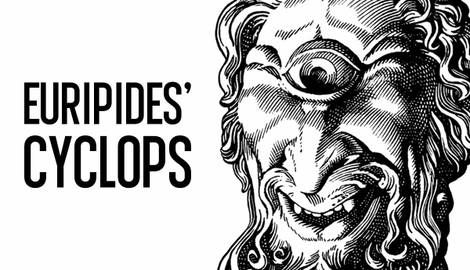

Euripides’ Cyclops is the only satyr play that has survived intact. We do not know anything about the performance history of this play, or why or even when exactly it was written. The plot borrows from well-known versions of Odysseus’ encounter with the cyclops Polyphemus. The plot is simple and brutal, but with comic elements provided by Silenus and the satyrs. The play is perhaps easy to dismiss, but Euripides raises some interesting questions about power and brutality.
The Main Characters
The three main characters in the play are Polyphemus, a cyclops; Odysseus, the cunning Homeric hero; and Silenus, the former companion and tutor of Dionysus. There are also a number of satyrs, described as Silenus’ sons, that act as the chorus. Odysseus’ shipwrecked crew is present, but none have speaking roles and were probably not depicted on stage.
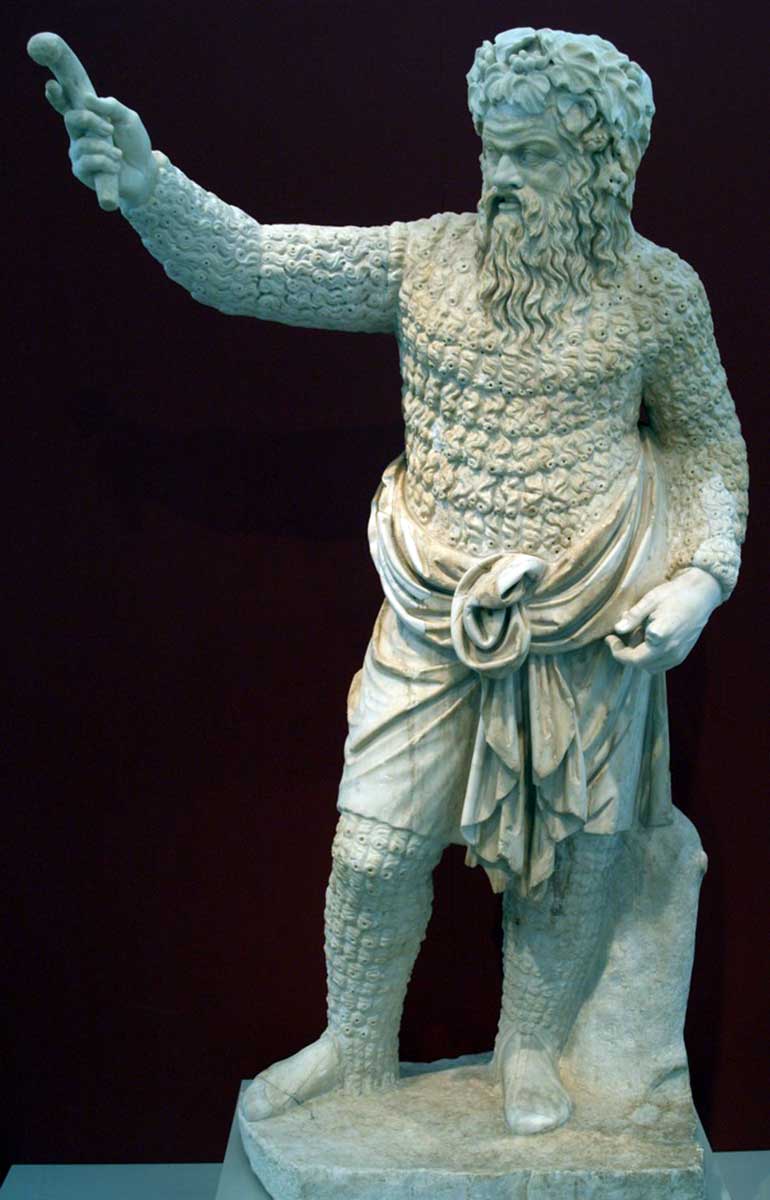
Silenus has a few guises in Greek mythology. Sometimes he is depicted as a drunken man and other times as a satyr-like creature. In Euripides’ Cyclops, he is depicted as an old man. In the play, Silenus is toadying, coarse, sly, and greedy. He is there for comic effect, as are his sons, the satyrs.
Odysseus is the same character we see in the Odyssey. He uses his cunning to outsmart the cyclops and escape. However, in Euripides’ play, we do not see all of the tricks Odysseus uses in Homer’s story.
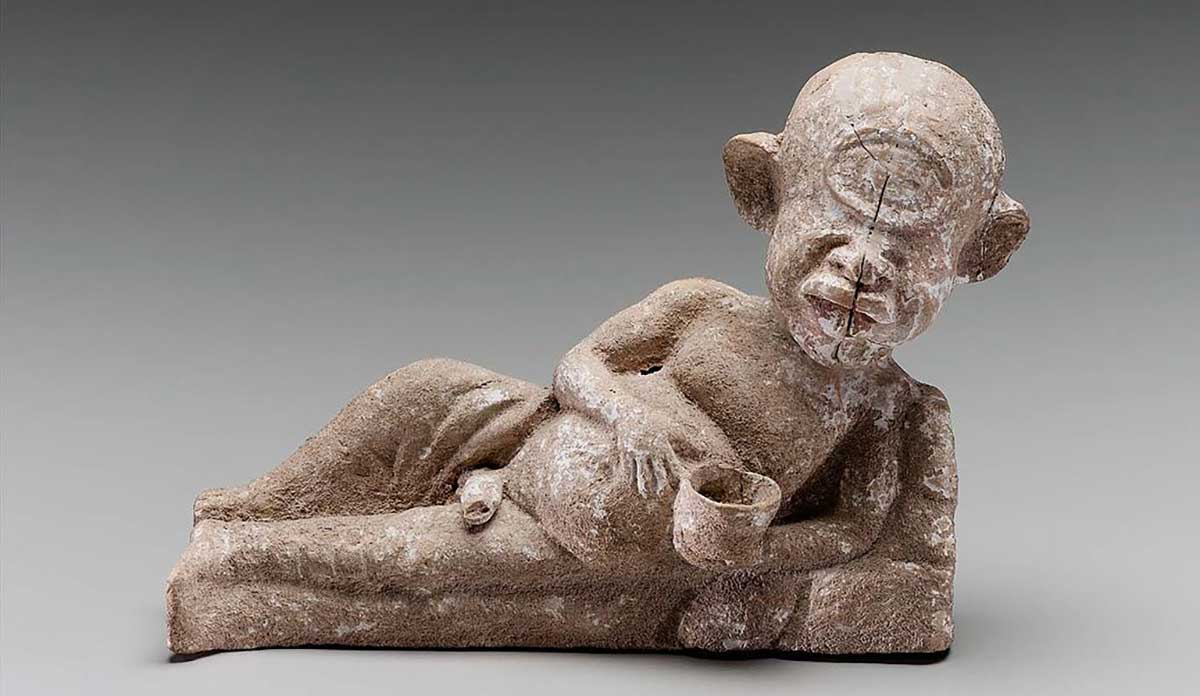
Polyphemus is a cyclops. He lives on an island with his cyclops brothers. They are referenced but not seen. Cyclopes are solitary creatures and self-sufficient. Polyphemus lives off the sheep, which he forces the satyrs to look after. They were captured and enslaved after becoming shipwrecked on the island. Polyphemus is brutish but not unintelligent. He believes himself to be superior to the gods by virtue of his brute strength.
The Play Opens With Silenus
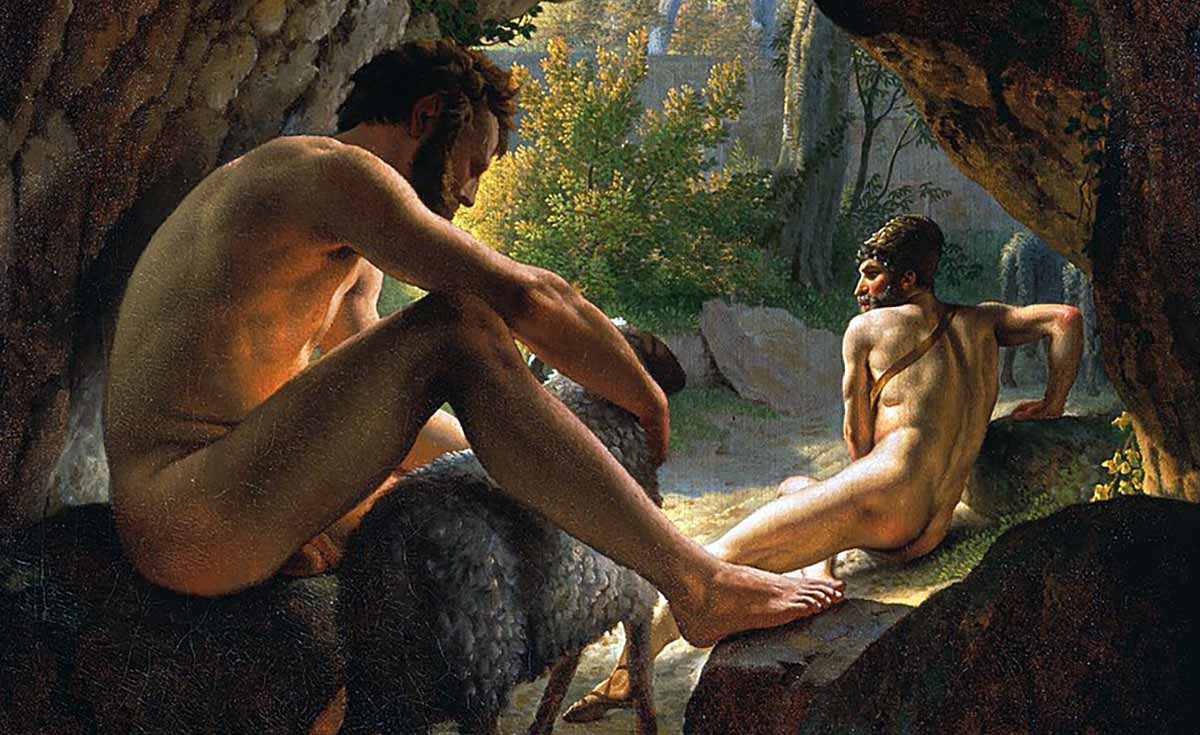
The play opens with Silenus outside the cave of Polyphemus, a cyclops. Silenus has a rake in his hand, and he is speaking aloud about his woes. His speech is a convenient piece of exposition that quickly fills in the audience on what is going on.
He calls out to Bromius (another name for Dionysus, the Greek god of wine, fertility, and theater, of whom Silenus was a tutor and companion). We learn that Silenus, along with his children, was shipwrecked after setting off on a quest to find Dionysus, who had fallen foul of Hera. The island on which they found themselves is occupied by the cyclopes, monstrous one-eyed ogres. They were taken prisoner by Polyphemus and forced to serve him.
This story would have been well-known to Euripides’ audience. They would also have recognized the Cyclopes and Polyphemus from The Odyssey. After Silenus’s speech, we see his children return from tending to Polyphemus’s sheep and hear news of the arrival of a Greek ship. Silenus does not yet know that this is Odysseus’ ship, but the Greek audience would have no doubt over who has just arrived.
Odysseus and his crew quickly arrive and introduce themselves. We get a bit of backstory and learn more about the cyclopes from Silenus. One thing that is established is that there is no wine on the island. The audience would know what a hardship this would be for Silenus! Odysseus promises to share some wine from his ship in return for food.
The wine is exchanged for food, and Silenus is delighted to taste “the drink of Dionysus.” The scene is quite merry as Silenus enjoys his first taste of wine in some time, but suddenly Polyphemus returns home.
Polyphemus Captures Odysseus and His Men
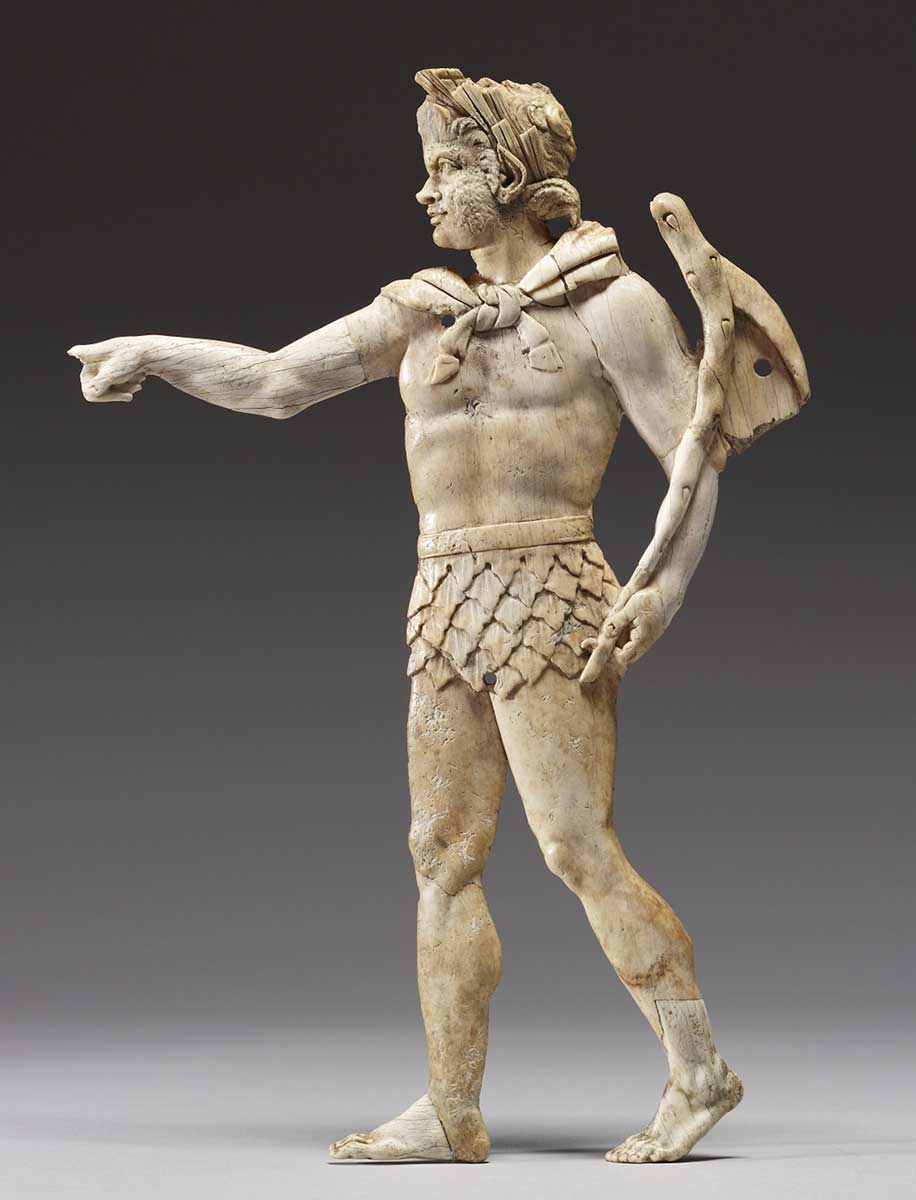
Polyphemus is angry and wants to know (a) if all the day’s work has been done, (b) about the status of his dinner, and (c) who Odysseus and his crewmates are. The satyrs reply that Polyphemus’ dinner is ready and he can have anything he wants. Silenus, lying, claims that the strangers beat him up and attempted to steal Polyphemus’ goods. He also says that they bragged about capturing Polyphemus and selling him as a slave. In response to this revelation, the cyclops asks for butchering tools and a fire to be made. He intends to eat the newcomers.
Silenus’ children are more honest and tell Polyphemus that their father is lying. They tell the truth that Odysseus and his men came honestly and offered to trade wine for food. Silenus protests, but Polyphemus does not believe him.
Odysseus pleads his case and appeals to Zeus as well as other gods and the sacred idea of hospitality. It was considered a great sin for the Greeks to treat honest visitors badly. However, Polyphemus is unmoved by Odysseus’ words. The scene ends with the cyclops driving the unfortunate men into his cave while Odysseus calls out to Zeus, “protector of strangers,” to help him and his men.
Odysseus Sets His Plan in Motion
Odysseus appears and starts talking to Silenus’ sons. We learn that Polyphemus has already slaughtered, butchered, and eaten two of Odysseus’ crewmates. None of the gory details are spared as the horrible fate of these men is recounted. Odysseus says that while the other sailors were huddled together in terror, he was forced to act as the cyclops’ servant during the meal. But as he did so, he formulated a plan.
The wily Greek, known for his cunning, gave Polyphemus some of the wine to drink. Since there is no wine on the island, the cyclops is not used to alcohol and is unaware of its effects. Odysseus plans to wait until the monster passes out drunk, and then, with the help of Silenus’ sons, he plans to burn out Polyphemus’ single eye with a huge wooden beam, sharpened and glowing red from the fire.
Silenus’ sons readily agree to help: they hate the cyclops as much as Odysseus and, like him, they are desperate to escape the island. Once Polyphemus is blinded or killed, they will all slip away to Odysseus’ boat and make their escape.
The drunken Polyphemus enters, carrying the wineskin, and tells the others that he is going to visit his brothers, the other cyclopes on the island, to share the drink with them. Obviously, this would scupper the plan, and so Odysseus (and Silenus, who has joined the scene) convinces Polyphemus to keep the wine to himself.
As they sit in the grass basking under the warm sun with Polyphemus drinking wine, the cyclops tells Odysseus he will eat him last as a reward for introducing him to such a fine drink. He asks Odysseus his name, and the cunning Greek tells him it is “Nobody.”
Sexual Innuendo in Cyclops
Satyr plays typically involve a great deal of sexual innuendo. For example, the actors portraying satyrs would wear enormous phalluses on their costumes, and when Silenus is first given a taste of the wine, he grabs his phallus and says, “with drink it is possible to make this stand to attention!” Now, the bawdy theme returns as the drunken cyclops starts referring to Silenus as his “Ganymede” and ushers him back into his cave.
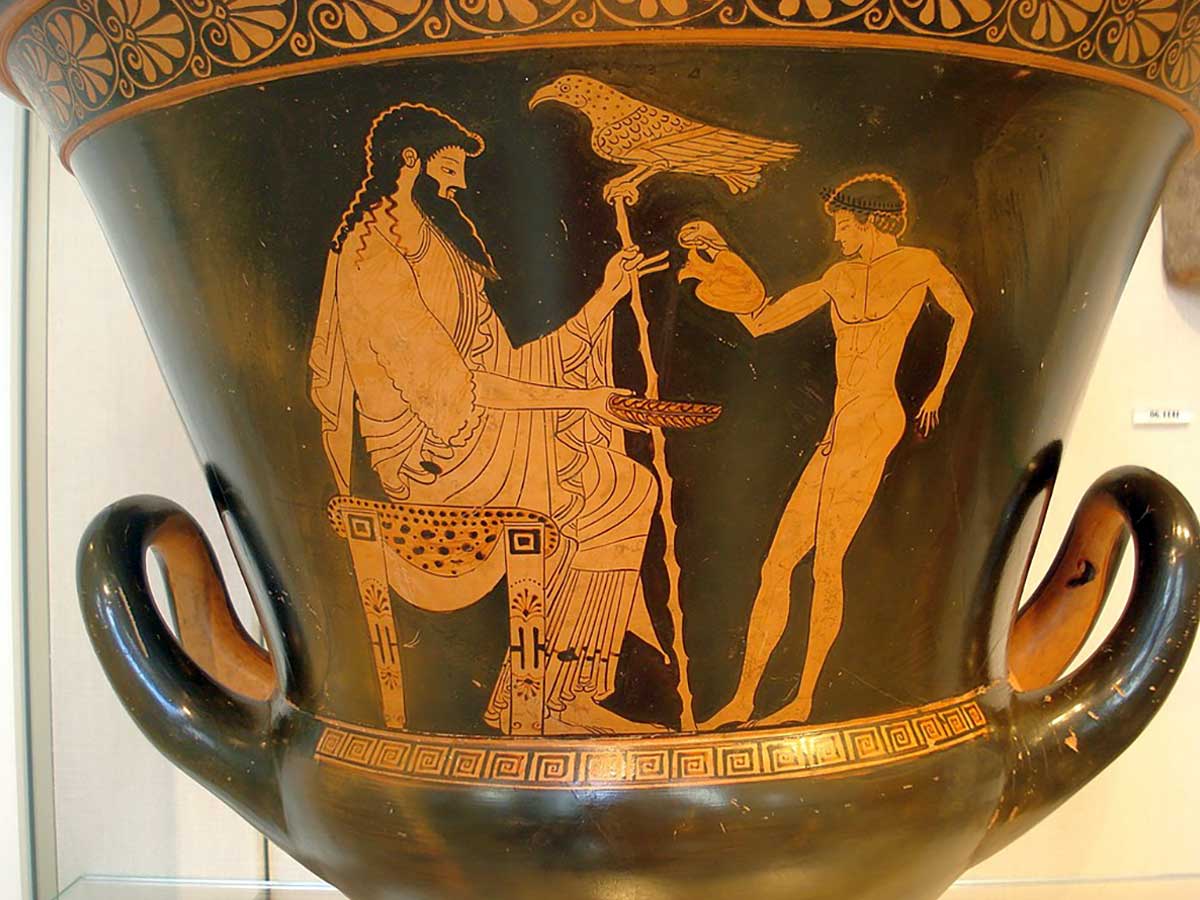
Ganymede was abducted by the gods to serve as cupbearer to Zeus. In Greek mythology, he is strongly associated with homoerotic passion. It is from the Latin form of his name, Catamitus, that we get the word catamite, which refers to a young boy involved in sexual activity with an older man. Silenus, in the play, is an old man, and so there is humor intended in this reference. As he is led into the cave, the usually wine-loving satyr says, “Oh woe is me! I’ll soon see that the wine is very bitter now.”
Odysseus and the Satyrs Escape Polyphemus
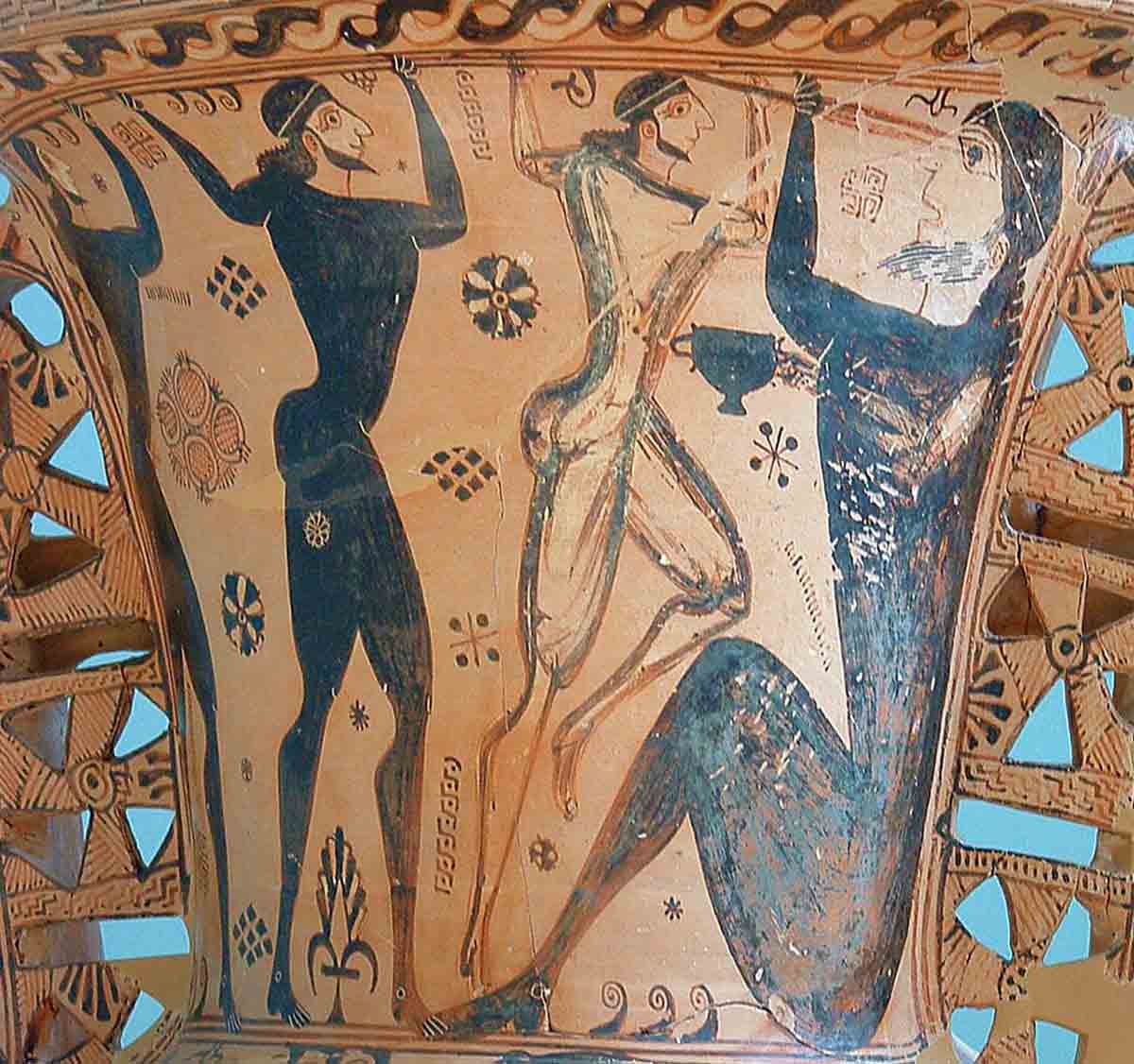
After the gruesome description of what Odysseus plans for Polyphemus, the actual blinding scene is played for comic effect. Instead of helping as they promised they would, Silenus’s sons bungle about and dither over the handling of the wooden beam. Their bungling notwithstanding, the plan succeeds, and Polyphemus’ single eye is burned out, and he is blinded.
In other versions of this story, Polyphemus cries out to his fellow cyclopes for help, saying that “Nobody has attacked me.” He means, of course, that Odysseus has attacked him, but because he thinks Odysseus is called Nobody, he tells those who would otherwise come to help him that nobody has blinded him. In Euripides’ version, the satyrs merely use the name “Nobody” to mock and taunt Polyphemus as he stumbles blindly about trying to find Odysseus.
The play ends abruptly and somewhat anticlimactically. Odysseus and his surviving crewmates do not sneak past the blinded cyclops by clinging to the underside of sheep but simply go back to their ship and sail away, accompanied by the satyrs.
The last words go to Polyphemus and the satyrs. The cyclops walks through his cave to the rear entrance, which overhangs Odysseus’ ship, and from there hurls a huge rock down to destroy the vessels. The satyrs gleefully announce they are off to serve their new master, Dionysus. The audience is left to assume Polyphemus is unsuccessful and that Odysseus, his crew, and the satyrs escape.
Themes of Brutality in Euripides Cyclops
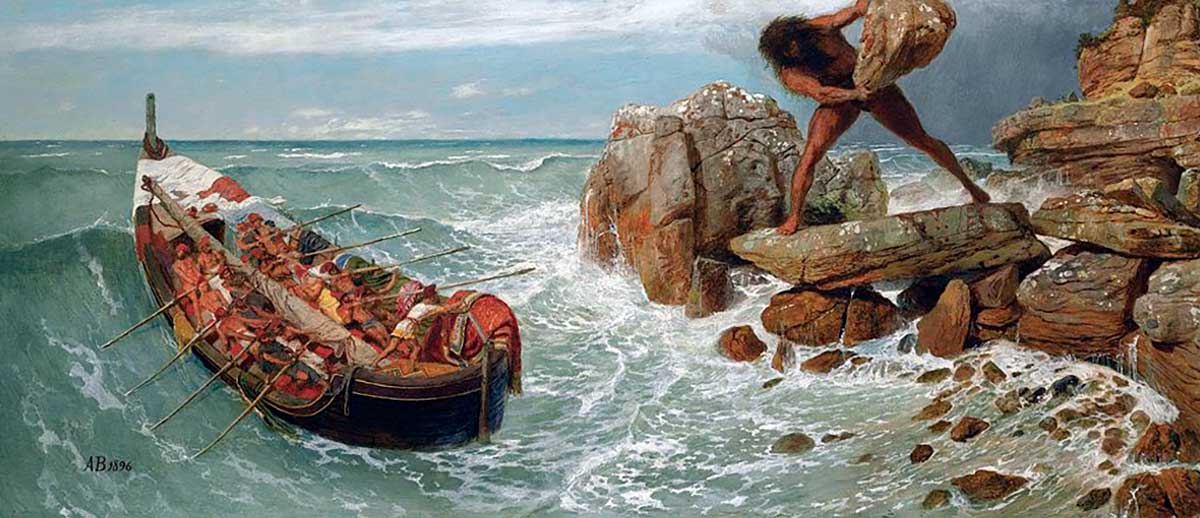
In Euripides’ play, we see a thoughtful cyclops and a less-than-eloquent Odysseus. Polyphemus is literally monstrous and violates many of the sacred Greek codes. In Odysseus’ speech, in which he begs for his life and the lives of his crewmates, it is made clear that Polyphemus is a Greek, albeit a god (he is the son of Poseidon).
But the cyclops does not care about that. Any sense of loyalty, let alone friendship, to fellow Greeks is out of the question. Neither does he care about the gods. He is unafraid of Zeus, whom he believes cannot hurt him. All of Odysseus’ arguments and pleas fall upon deaf ears.
Polyphemus believes himself superior to the other gods, obligated only towards himself. His gluttony and selfishness provide him, as far as he is concerned, with a good life, which he believes shows him that he is right. The argument the cyclops puts forward for doing exactly what he wants without concern for others is a combination of the ideas of “might is right” and “greed is good.”
What is of interest is that the usually eloquent Odysseus fails to offer any convincing arguments against Polyphemus’ claims. Indeed, in the end, it is by brute strength and violence that Odysseus manages to escape. In his play, Euripides seems to suggest that when facing violence and brutality, the answer is to match like for like.