
The oeuvre of Henry James spans some 20 novels, dozens more novellas and short stories, plays, travel writing, and criticism. It’s not just the breadth of this body of work that daunts readers. James is a novelist’s novelist, who innovated a style entirely his own: sprawling sentences in which each word is meticulously chosen to add to the enigmatic maze of phrases he has pieced together. Where to start? No better place than his early style, with its famous ‘international theme,’ moving through to his psychologically complex, highly interiorized later work.
The Portrait of a Lady
In 1881, Henry James was already the author of six novels. A cosmopolitan who had spent as much of his youth traveling in Europe as in his native New England, James had filled his books so far with the ‘international theme’: contrasting American innocence with European experience, New World enterprise with Old World culture. No surprise that these early novels included titles such as The American (1877) and The Europeans (1878).
The Portrait of a Lady expanded on these ideas by integrating another element that would become a James hallmark: a brilliant, beautiful, often rich female protagonist who must decide how to make her way in a world that still prizes marriage above all. James’s first great success, and still one of his most read works, the novella Daisy Miller (1878), had taken up this theme alongside the international one by depicting its American heroine’s changing fortunes in Europe.
Isabel Archer, in Portrait of a Lady, is another of these beguiling heroines. What sets this novel apart (making it, for many readers, James’s first masterpiece) is the space it devotes to exploring its protagonist’s inner workings.
We follow every step of Isabel’s mental processes as she asks herself whether to marry Gilbert Osmond in spite of her doubts, then as she tries to make sense of her betrayal at Gilbert’s hands and those of his accomplice, Madame Merle. This painstaking recreation of the human mind in fiction would become James’s greatest accomplishment.
The Aspern Papers
You’d be forgiven for thinking that an author bent on mimicking the intricacies of consciousness in prose wasn’t exactly a writer of page-turners. Yet The Aspern Papers, a novella published in 1888, is exactly that.
Our unnamed narrator travels to Venice in hopes of getting a glimpse at some letters, or ‘papers,’ by the late, celebrated poet Jeffrey Aspern (an invention of James’s, though he drew on the increasing interest among scholars by the late 19th century to gather information about deceased writers). The narrator finds himself embroiled in a game of mutual dissembling with the old woman who guards the papers and her niece.
The novella is a gripping piece of metafiction that anticipates certain postmodern texts that also revolve around literary detective work, such as A.S. Byatt’s Possession (1990) and the dark academia genre. As the tension mounts throughout The Aspern Papers, the reader is left questioning what really motivates each character: are they intent on preserving Aspern’s memory, or satisfying their own desires?
The Turn of the Screw
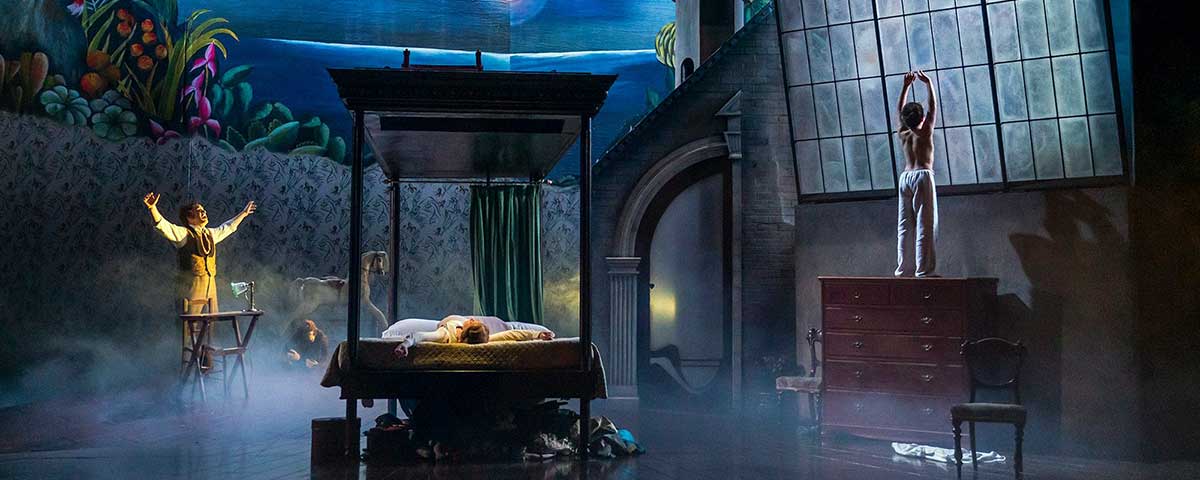
Probably James’s best-known piece of short fiction, if not his best-known work altogether, The Turn of the Screw has been adapted multiple times since its publication in 1898: it has been turned into films (such as The Innocents, 1961), reworked as television series (such as The Haunting of Bly Manor, 2020), referenced in other fiction, and formed the basis of a Benjamin Britten opera.
Why does The Turn of the Screw continue to capture audiences? In part, because it is a classic horror story, complete with haunted house, creepy children, and an unnamed, mounting threat. Its title refers to the gradual, torturous tightening of tension as the governess at the center of the story tries to determine whether the children she is in charge of really are possessed by the ghosts of Bly Manor’s former servants.
So far, so Gothic. But what makes The Turn of the Screw even more captivating, and especially worth reading in its original form, is James’s use of unreliable narration. Unlike earlier Gothic texts, which depict supernatural elements, James’s novella suggests the ghosts may be only in the mind. The question is, whose mind? Using his trademark ambiguity, James makes it possible to believe that the children have made up the apparitions, or that the governess has fabricated the entire story herself.
The Ambassadors
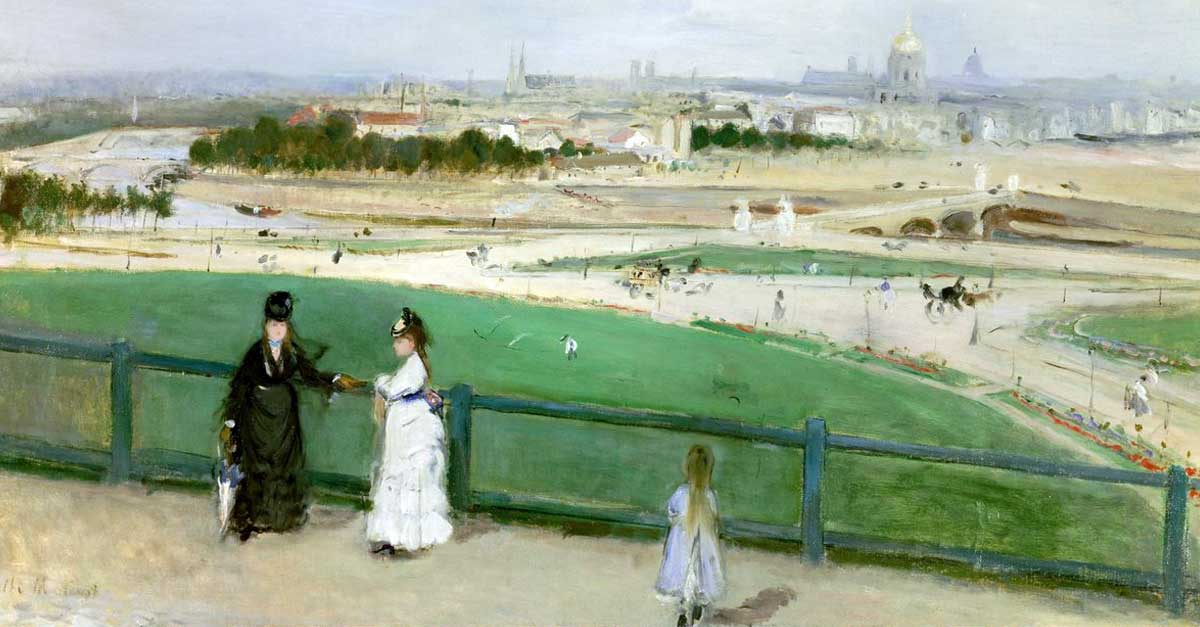
This 1903 novel was James’s favorite of his own works. Here, the ‘international theme’ of his earlier phase meets the intricate prose of his creative apex. This novel, and the novels before and after it (The Wings of the Dove (1902) and The Golden Bowl (1904)) are generally considered his finest work.
The protagonist, Lewis Lambert Strether, is sent to Europe by his fiancée to bring her son from a previous marriage back to America: back to civilized morals and sensible work. This set-up would later serve Patricia Highsmith well for the opening of The Talented Mr Ripley in 1955.
But Chad Newsome, the son, is not living a dissolute lifestyle in Europe at all. He is charming, cultured, and confident. He introduces Strether to Paris, and the ambassador soon finds himself deviating from his mission. It is another story built around enigmas: is Newsome really living a better, more moral life? Is Strether right to feel liberated the longer he spends away from America, the more he immerses himself in European culture?
Once again, James’s complex prose heightens the sensation of entrapment in a maze as the reader tries to puzzle through all this, with the entire experience told in partial, third-person narration: that is, we seem to have an omniscient narrator, but everything is filtered through Strether’s perspective.
The Golden Bowl
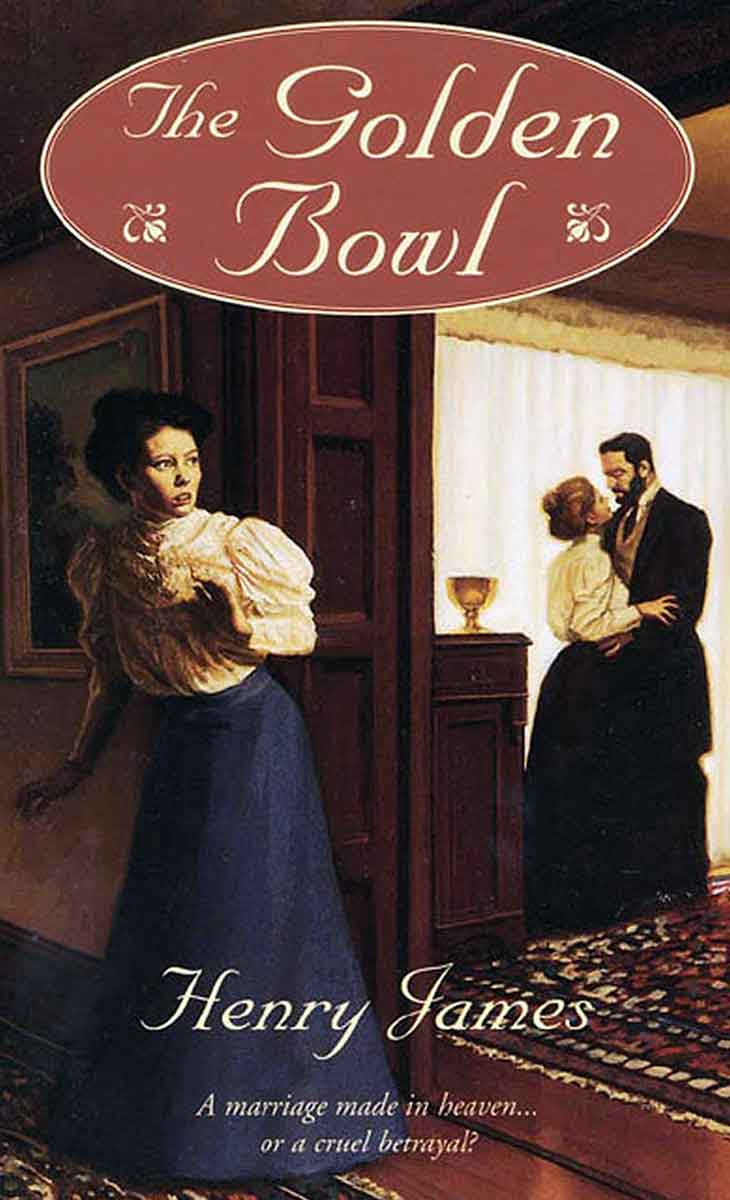
In contrast to The Ambassadors and its focus on the protagonist’s point of view, the complexity of The Golden Bowl comes from its masterful evocation of multiple points of view, but without resorting to the epistolary or multiple-narrator constructions of earlier authors.
The plot of The Golden Bowl is relatively simple. Prince Amerigo marries Maggie Verver, daughter of an American widower, Adam, in London. While there, they meet a fellow American, Charlotte Stant, who, before long, marries Adam. Unbeknownst to both Adam and Maggie Verver, their spouses had formerly had an affair, and are now thrown together by the new marriages.
The golden bowl of the title is symbolic: on one of their secret outings, Amerigo and Charlotte decide not to buy it as a wedding present for Maggie because it has a tiny crack. Maggie later buys it, causing the shopkeeper to reveal their affair. Each character has a reason not to shatter this golden bowl or destroy the two marriages by revealing their secrets.
It is an emotionally claustrophobic novel, and James’s narration emphasizes this by moving seamlessly among the four protagonists’ thought processes. This, paired with James’s forbidding sentence construction, makes for an astonishing read in which most of the action appears to happen inside the characters’ minds. In this, The Golden Bowl anticipates modernist stream-of-consciousness techniques, used by authors like Virginia Woolf and James Joyce to mimic the complex, often confusing patterns of thought itself.
The Beast in the Jungle
The Golden Bowl had shown James moving away from external action and deeper into the recesses of his characters’ minds. All that happens in The Beast in the Jungle, a novella published in 1903, is that John Marcher meets May Bartram, a woman he used to know 10 years ago, who reminds him of his old, looming fear that some catastrophe was lying in wait for him like a “beast in the jungle.”
Believing he would subject anyone he married to the same fate, he keeps Bartram close but not too close, dragging both of them down into a half-life of fear and hiding. Eventually, he realizes his catastrophic fate has been, all along, to waste the best years of his life worrying about some unknown future event.
It is a relatively simple idea, full of existential possibilities: how should we best live our lives? What is our responsibility towards others? Is it better to cautiously avoid failure or to throw ourselves hopefully towards the unknown?
With its unfussy plot—very few characters, only one setting, in contrast to many of James’s other works which move freely between European countries and America—The Beast in the Jungle has the makings of a classic tragedy, albeit updated to the turn of the 20th century, turning upon the distinctly modern fatal flaw of ennui.
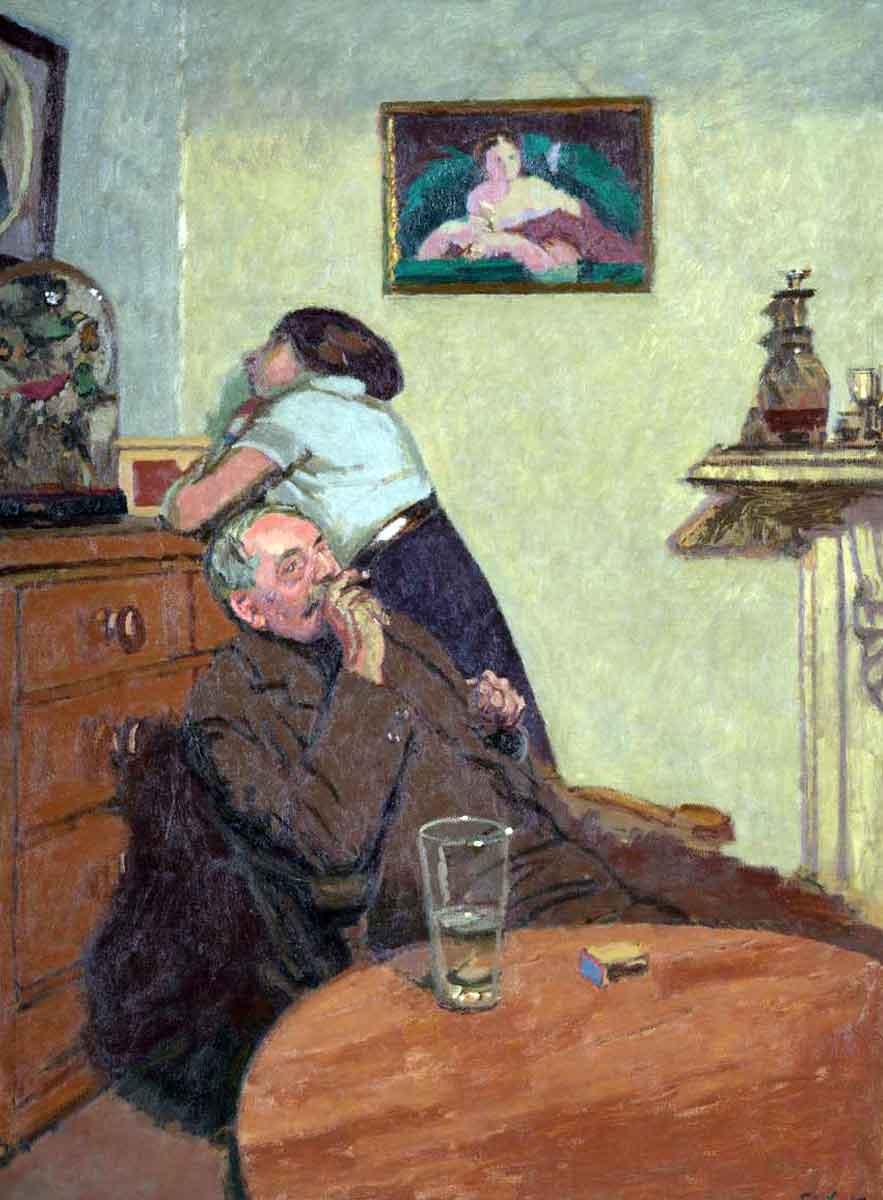
Of course, in James’s hands, it is anything but a simple story. James’s masterful techniques of circumlocution and evasion were well used here, bringing to life a protagonist whom many have suspected to be close to James himself.
Indeed, the sexual ambiguity of Marcher and Bartram’s relationship has led critics to read The Beast in the Jungle as a possible reflection on the conditions of being closeted. Perhaps the ‘beast’ Marcher fears, and the reason he cannot quite allow Bartram into his life, are linked by latent homosexuality.
This was, as the infamous late-19th-century phrase had it, “the love that dare not speak its name,” and James’s prose was the perfect evocation of the closet, with all its symbolic half-statements and partial revelations.
However, we read the story, James’s style is at its peak by the end, reaching an intensity which clearly shows his influence on the modernists some two decades later:
“He saw the Jungle of his life and saw the lurking Beast; then, while he looked, perceived it, as by a stir of the air, rise, huge and hideous, for the leap that was to settle him. His eyes darkened – it was close; and, instinctively turning, in his hallucination, to avoid it, he flung himself, on his face, on the tomb.” (James, 1997)
Source
James, Henry (1997). The Beast in the Jungle. Project Gutenberg edition.