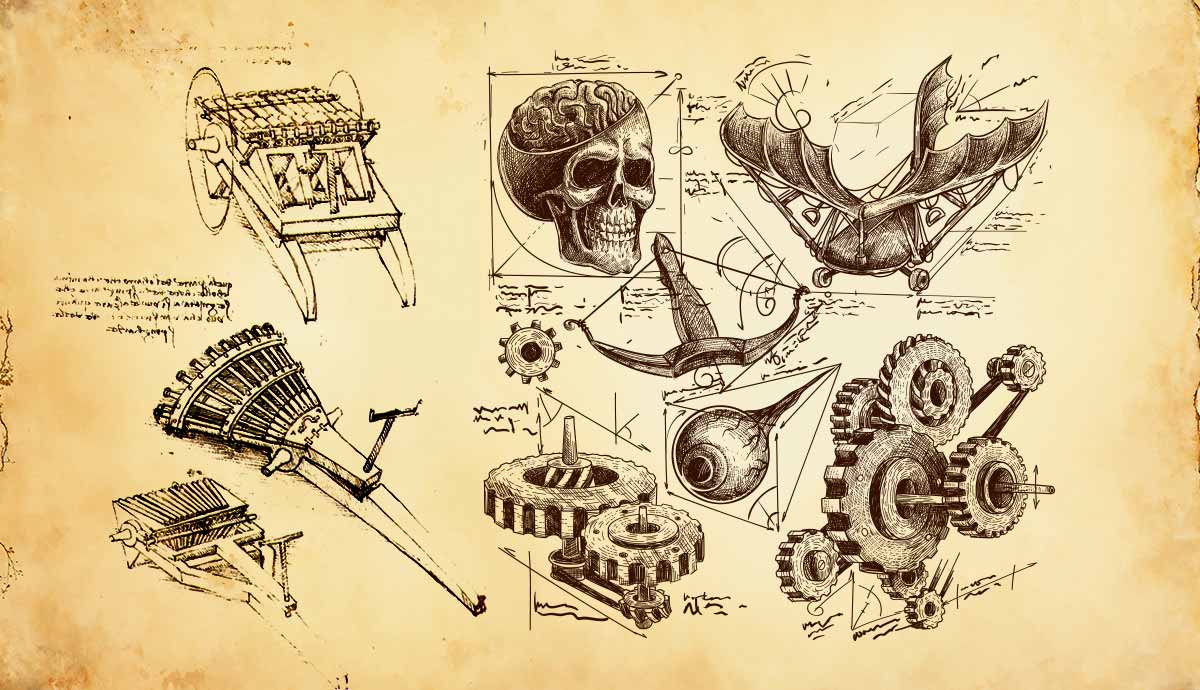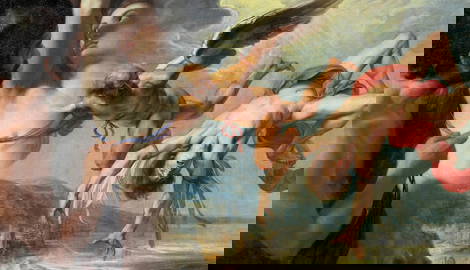

Imprisoned on the island of Crete, the great Greek inventor Daedalus created flying mechanical wings made of feathers and wax for him and his young son, Icarus, to fly to freedom. But within moments of taking flight over the Aegean Sea, liberation turned to catastrophe. While Icarus understood the fragility of his wings, he ignored his father’s warnings and flew too high, resulting in his own destruction. Recorded by the Roman poet Ovid in his Metamorphoses, what is the moral of this ancient Greek story?
Daedalus Was an Ancient “Renaissance Man”
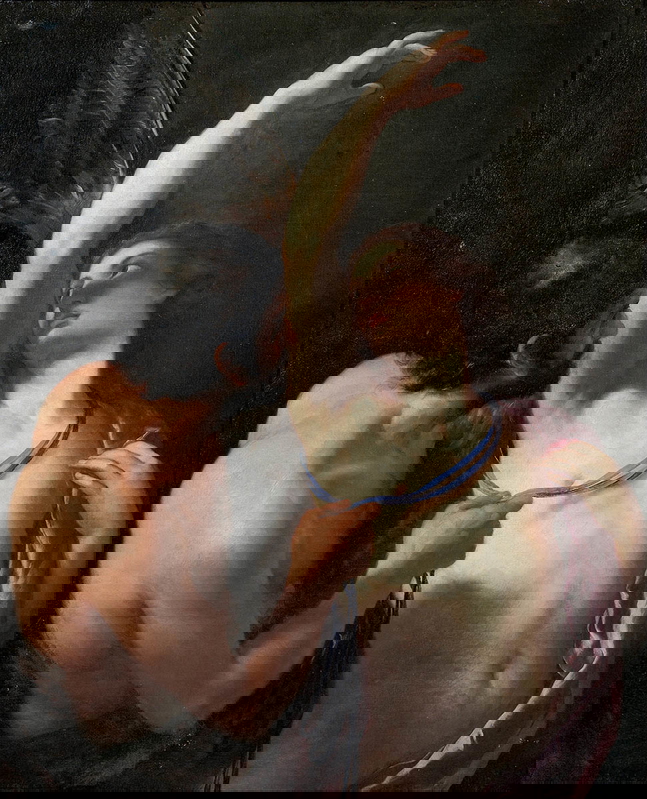
According to the legend, Daedalus was a sculptor of unparalleled skill. In one of Plato’s dialogues, Socrates mentions a legend that Daedalus’ sculptures had to be tied down or they would run away. Daedalus’ art was so lifelike that it came to life. Many ancient wooden cult images in Greek temples were said to be his works. Pausanias, the travel writer of the 2nd century AD, saw quite a few of these images and wrote that they captured a sense of the divine.
But Daedalus was more than a skillful artist. He was also an inventor. The ancients attributed a series of inventions to him, the most important being carpentry. Daedalus was the mythical equivalent of a Renaissance man.
Daedalus’ Dark History in Athens
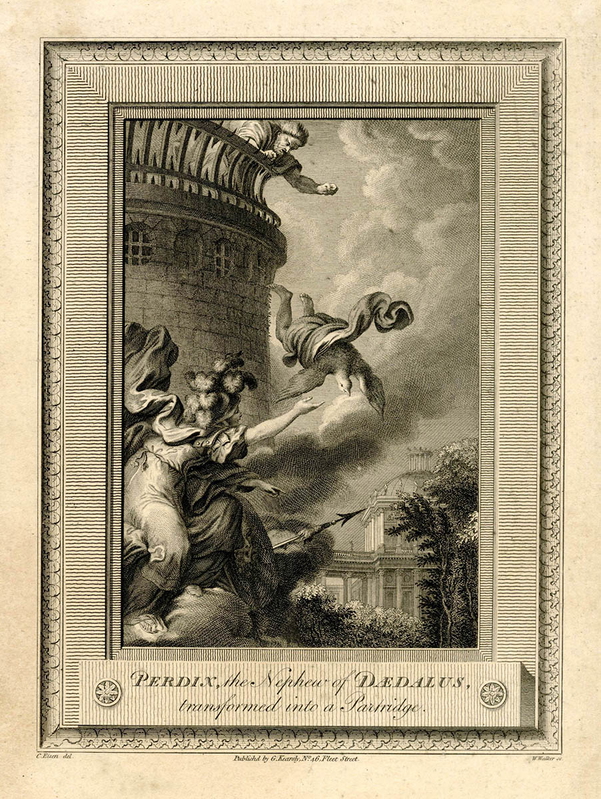
According to Ovid’s Metamorphoses (VIII.236-259), Daedalus was born in Athens (other sources claim he was Cretan) and quickly became a respectable citizen due to his skill and intellect. His sister believed that her son, Talos (Calos or Perdix in other sources), could greatly benefit from studying next to his uncle in Athens. Little did she know.
Daedalus took Talos and taught him everything he knew. The boy was young and quite witty. He quickly took in all the knowledge and began applying it to the world around him. Daedalus soon realized that the boy was not simply smart, but smarter than him. If Talos continued this way, Daedalus would be completely overshadowed. So, Daedalus threw Talos off a cliff. The goddess Athena saved Talos by transforming him into a bird that received his mother’s name, Perdix. Daedalus was tried for this act and banished from Athens.
Daedalus found refuge in the court of King Minos, the mythical king of Crete. Minos ruled the seas with a mighty fleet. With Daedalus in his court, he became an unstoppable force. During his time in the court of Minos, Daedalus had the chance to start over. He had his son Icarus with a slave called Naukrate.
Pasiphae, the Minotaur, and the Labyrinth
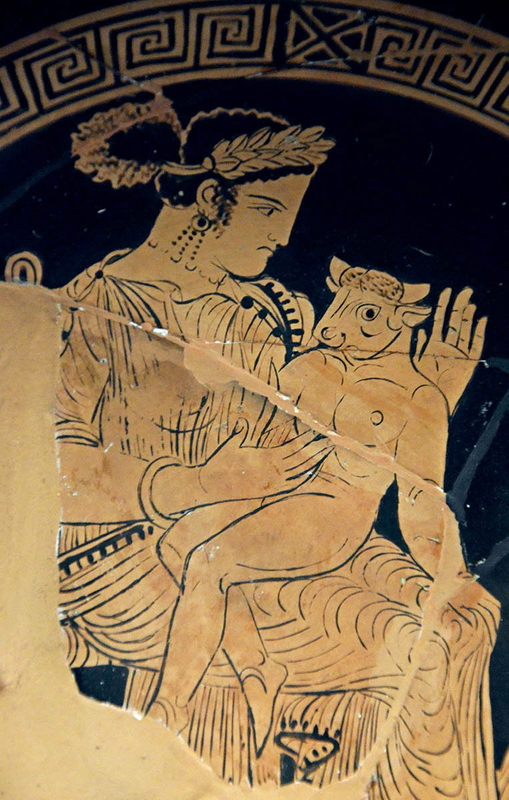
As was often the case in Greek myth, Daedalus’ downfall began with the gods. One day, Minos asked Poseidon to send him a sign of divine favor in the form of a beautiful bull, promising that he would return the animal in the form of a sacrifice. The god granted Minos’ wish, and a uniquely beautiful bull appeared from the sea. But the bull was so fine that Minos decided to keep it and sacrificed another in its place.
Divine punishment was swift and arrived in the form of a divine madness that took over Pasiphae, Minos’ wife. She became unable to control an impulse to mate with the bull that Poseidon had sent. Unable to perform the act as the bull had also turned disobedient, she asked for Daedalus’ help to accomplish this monstrous act.
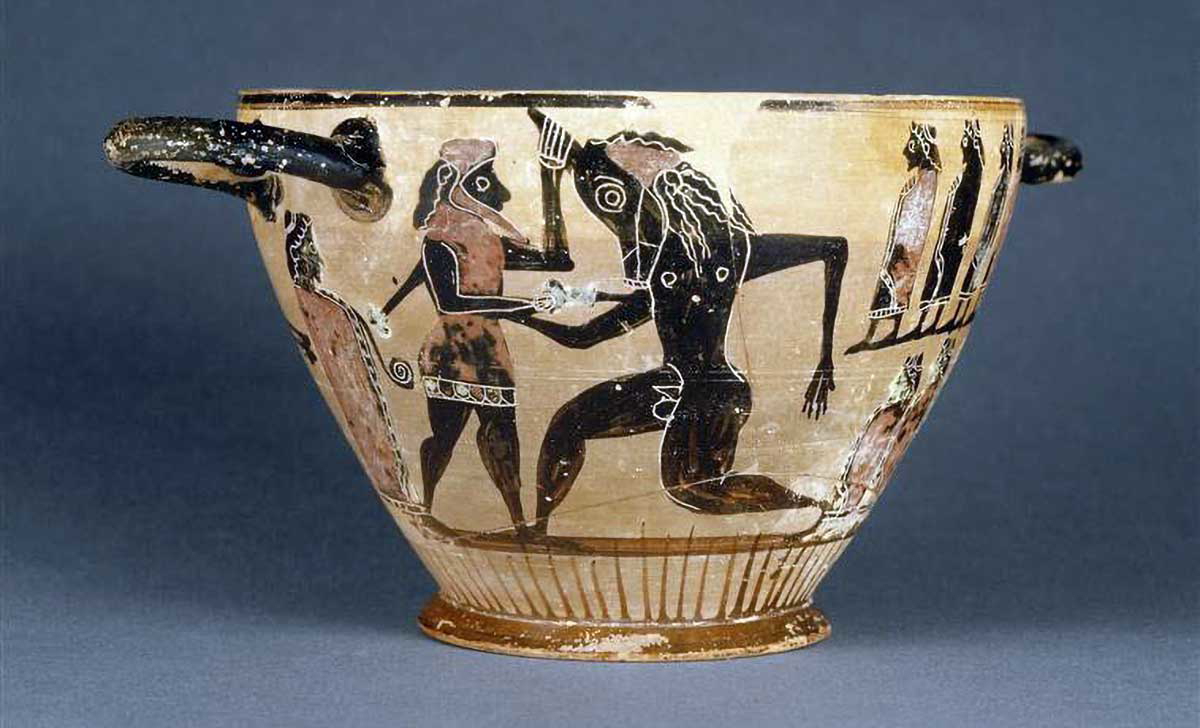
Daedalus fashioned a hollow, wooden cow on wheels sewn into a cow hide to trick the bull. Pasiphae hid inside the effigy, and the union was realized. The consequence was the birth of the Minotaur, half man and half bull.
When Minos saw the terrible creature, he asked Daedalus to construct the Labyrinth to hide it. Minos later used the Minotaur to maintain a reign of terror over Athens by asking for seven young women and seven young men from the city to be fed to the beast as tribute regularly. Eventually, Theseus, an Athenian hero, came to Crete and slew the Minotaur with the help of Ariadne, Minos’ daughter. Some ancient writers even claim that Daedalus played a role and helped the couple in their quest.
Daedalus and Icarus in Prison
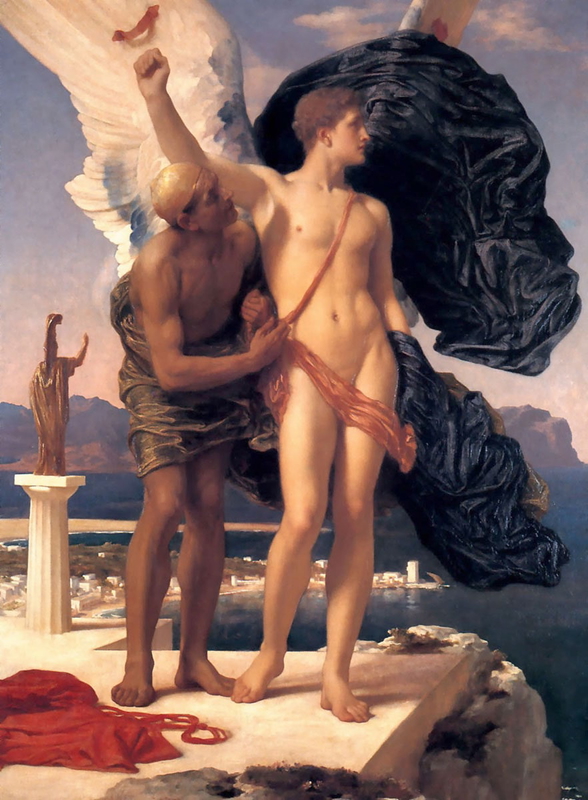
According to Ovid, at some point, Daedalus grew to hate Crete and decided to return home. However, Minos was determined to keep the inventor near him, so Minos imprisoned Daedalus. Other writers claim that Minos threw Daedalus in a cell after learning about his role in Pasiphae’s sin, Theseus’ escape, or simply to keep the mysteries of the Labyrinth a secret.
Daedalus was imprisoned in a tower overlooking the ocean. Life in prison was not easy, but at least Daedalus was not alone; his dear son Icarus was there with him. Still, Daedalus was desperate to escape from Crete.
He [Minos] may thwart our escape by land or sea, but the sky is surely open to us: we will go that way: Minos rules everything, but he does not rule the heavens.
Ovid, Metamorphoses VIII.183
And so, Daedalus did what he knew best; he invented. He studied the movements of birds and built a device mimicking them. He then laid down multiple feathers in a row from shortest to longest and tied them together using beeswax and thread. Meanwhile, Icarus played with the feathers, laughing.
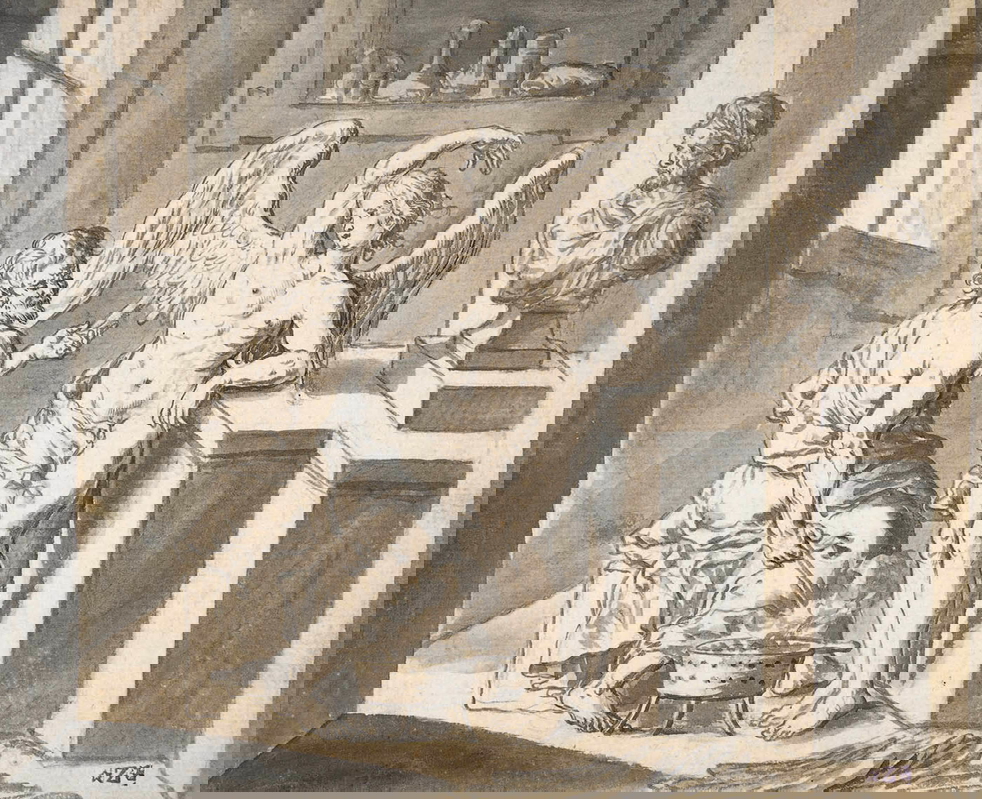
When Daedalus finished, he demonstrated the wings to Icarus and explained how to use them and what he must avoid.
Let me warn you, Icarus, to take the middle way, in case the moisture weighs down your wings, if you fly too low, or if you go too high, the sun scorches them. Travel between the extremes. And I order you not to aim towards Bootes, the Herdsman, or Helice, the Great Bear, or towards the drawn sword of Orion: take the course I show you!
Ovid, Metamorphoses VIII.183-235
Daedalus’ warnings were serious. He understood that this was no game and that it was a life-threatening risk for himself and his son. Icarus, on the other hand, did not recognize the dangers of the flight. But there was no other choice. Daedalus approached Icarus and kissed him. Then he took to the sky, leading the way while teaching Icarus how to use his wings.
Icarus Flies Too Close to the Sun
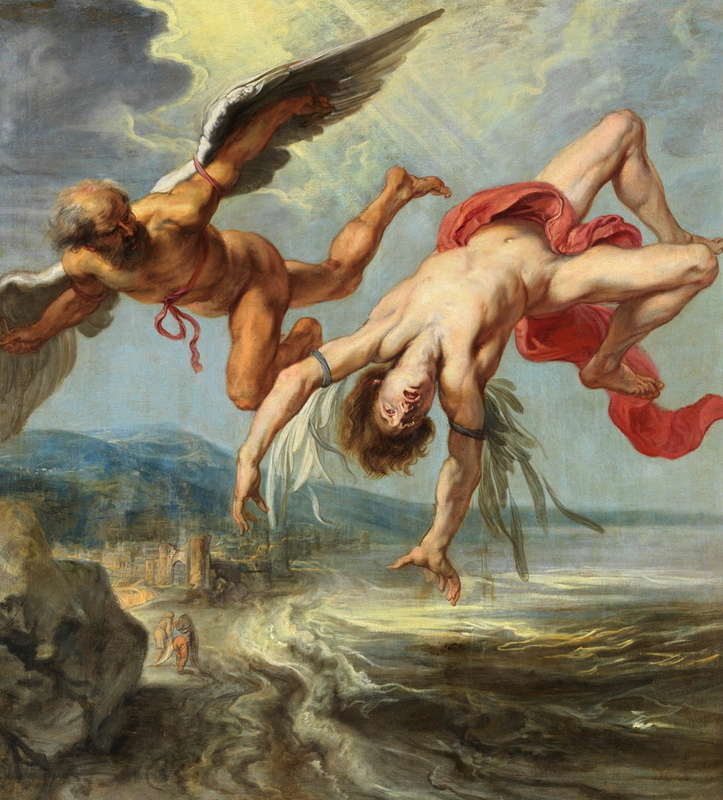
Daedalus and Icarus flew away and left Crete behind them. But as they were approaching the island of Samos, Icarus became arrogant. He felt an unconquerable urge to fly towards heaven, as close to the sun as he could. Icarus ignored Daedalus’ instructions and flew higher and higher until the wax that held the wings together melted, and Icarus fell at speed. Icarus tried to fly, but his hands were now naked. He fell, and the only thing left to him was to scream for his father.
“Icarus, Icarus, where are you? Which way should I be looking to see you?” screamed Daedalus, but Icarus had already drowned in the dark sea, which would become known as the Icarian Sea.
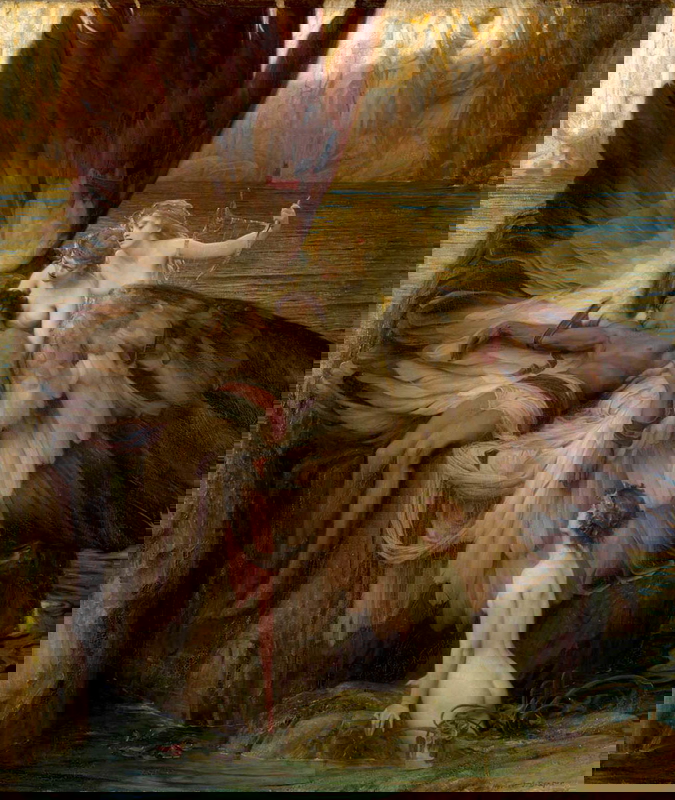
Finally, Daedalus found the fallen Icarus floating amidst feathers. Cursing his inventions, he took the body to the nearest island and buried it there. The island became known as Icaria. Meanwhile, a little bird visited Icarus. It was his nephew Talos, now called Perdix, who returned to enjoy his uncle’s suffering.
Parallels to the Story of Phaethon
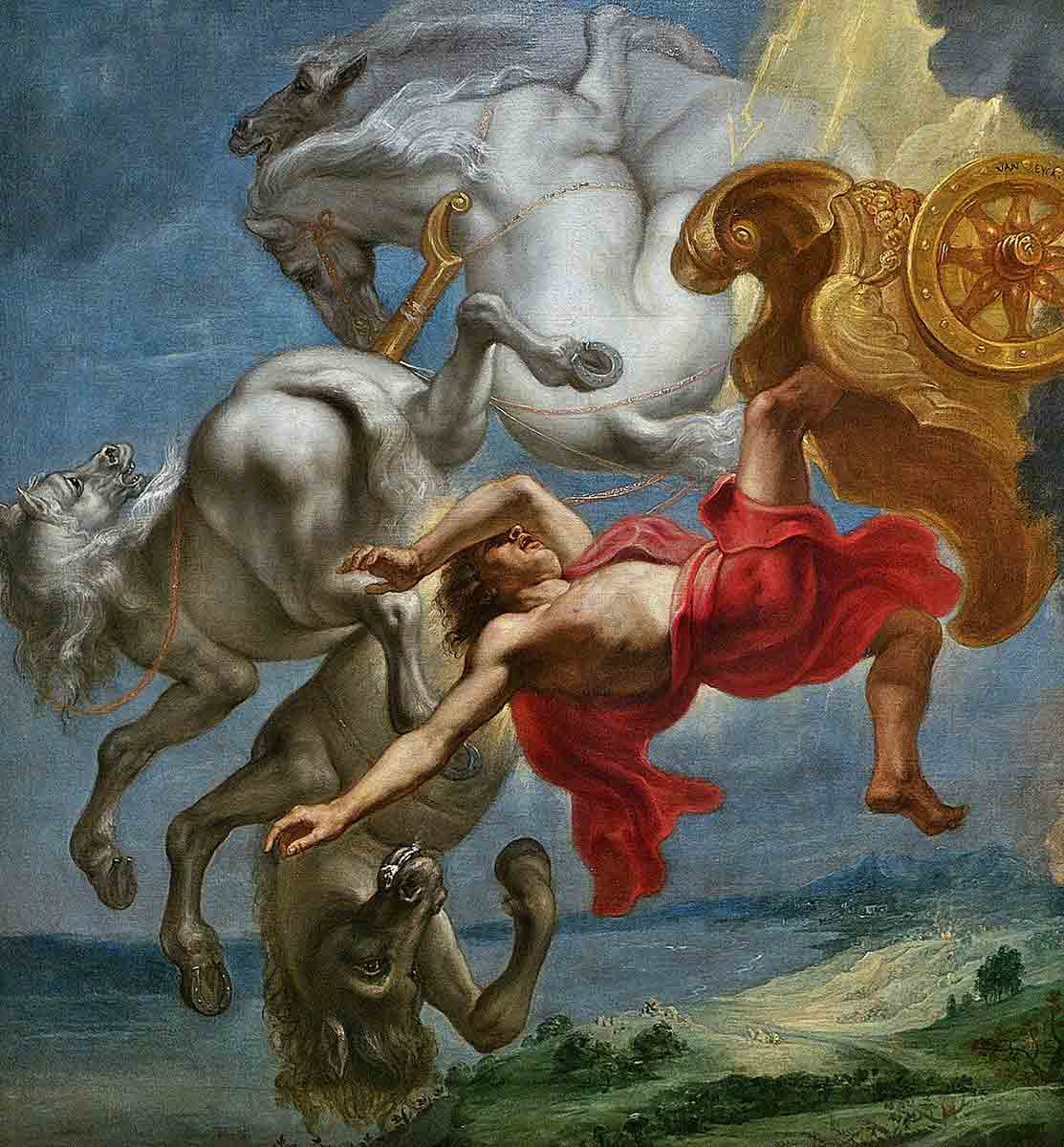
The story of the fall of Icarus is quite similar to another story from Greek mythology, the fall of Phaethon. Phaethon was the son of Helios and insisted on driving his father’s sun chariot. While the god warned him that this would bring about his end, Phaethon insists. Finally, Phaethon gets what he wants, only to realize that he does not have what it takes to control the chariot’s horses. He falls from the sky and meets his end. Like Daedalus, Helios grieves for his son, but nothing can bring him back.
Interestingly, Ovid recorded the Greek myths of Icarus, Phaethon, and Talos (or Perdix) in his Metamorphoses. In these three stories, the theme of a young, ambitious man falling in a tragic manner is common. In all three stories, the fallen meet their ends after they attempt to surpass a certain limit that they were not supposed to. Icarus flies too close to the sun, Phaethon insists on driving the sun’s chariot, and Talos surpasses Daedalus in inventiveness. The lesson of these stories appears to be that a son should not rush to surpass his father.
Daedalus and Icarus: Avoid the Extremes, Enjoy the Flight
A unique element in the story of Daedalus and Icarus, however, is that Icarus is instructed to fly between the extremes, not too high but also not too low. We could interpret this as a warning to avoid being too ambitious while also not becoming complacent. Icarus is instructed to find the golden mean. If we think about this, it is actually pretty good life advice. How many young people burn out due to excessive ambition? How many young people never develop their talents due to apathy? In a world with shrinking attention spans and an increasingly toxic work culture, it can be hard to find the golden mean.
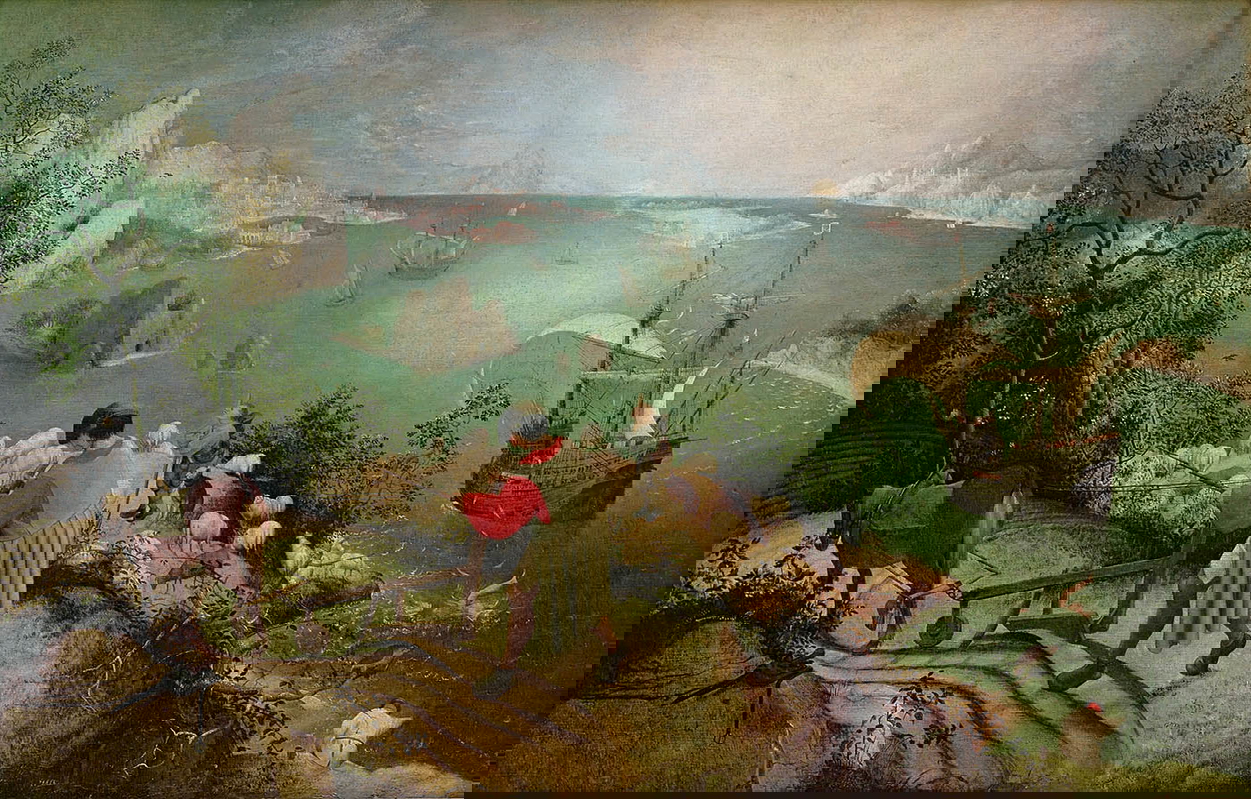
So, what should we do? In Brueghel’s painting above, we can see three men (a plowman, a shepherd, and an angler) going about their humble daily tasks. However, if we look at the bottom right of the image, we will notice that someone is drowning in the sea. That is Icarus. This simple composition offers a grim reminder. In the end, no matter what you do, life will continue. The plowman will continue to plow, the shepherd will continue to watch his flock, and the angler will continue to wait for fish to take the bait. Perhaps what we should do is learn from the story of Daedalus and Icarus and simply enjoy the flight.